Famous Speakers

RUEDIGER HAGEDORN
End-to-End (E2E) Value Chain Director
The Consumer Goods Forum
Architect the Future of Trade
Propose a comprehensive curriculum redesign, “ECR 4.0,” aimed at transforming supply chain education by training students as “Architects of the Algorithm of Goods.”

VIRGIL POPA
Professor Ph. D.
Valahia University of Târgovişte, Romania
End-to-End (E2E) Value Chain Director
The Consumer Goods Forum
Security of the supply chain has always been a concern of transport, logistics and manufacturing companies. A resilient company is able to better support the unpredictability of the global trade. New technologies powered by AI and propose a new framework for understanding the role of the customer/shopper journey.

GERD WOLFRAM
Doctor
IoT Innovation & Consult
Cologne, Germany
Architect the Future of Trade
The core philosophy advocates for practical Simulation over rote memorization, requiring students to use generative AI tools to solve complex operational challenges, such as the Bullwhip Effect, in virtual environments.

MICHAEL BOURLAKIS
Professor Ph. D.
Cranfield University, England
The presentation will discuss the challenges and major disruptions faced by supply chains over the past few years and it will showcase the urgent need to incorporate resilience strategies. Various supply chain strategic approaches regarding resilience will be analyzed too.

THEODOR PURCAREA
Pofessor Ph.D.
Romanian Distribution Committee, Romania
Supply chains’ digital transformation is more and more challenged by contextual intelligence while advancing on the path to ensure trustworthy customer experience.

MARTA STAROSTKA-PATYK
Associate Prof. Ph. D. Hab.
Warsaw University of Technology, Poland
Human Activity Recognition (HAR) is rapidly emerging as one of the most discussed AI-driven technologies for smart warehouses and intelligent logistics systems.
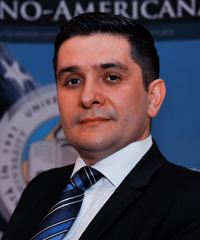
COSTEL ILIUŢĂ NEGRICEA
Professor Ph.D Hab.
Romanian-American University, Romania
Considering the imperative of ensuring supply chain transformation into a consumer-centric supply chain within consumers’ rising AI’s usage, we focused on actionable steps to face the current real challenge in making a compromise between consumer phygital experience.

Tomasz JAŁOWIEC
Professor Hab.
Warsaw University of Life Sciences, Management Institute, Poland
The use of artificial intelligence (AI) in the logistics companies paves the way for revolutionary changes, offering enormous prospects for process optimization and cost reduction, while facing significant challenges related to technology implementation, data, and ethical issues.

GOKHAN KIRBAC
Associate Professor Ph. D.
Istanbul Kültür University, Turkey
Global supply chains have become increasingly complex due to expanding supplier networks, fluctuating demand patterns, variable transportation conditions and the accelerated pace of digital transformation. Supply Chain Control Tower (SCCT) as a digital architecture offering real-time visibility, data consolidation and centralized monitoring capabilities.

MIHAELA ŞTEŢ
Associate Professor Ph. D. eng.
Techincal University of Cluj, Romania
Dynamics of Resilience in Food Retail Supply Chains of Romania Following Recent Disruptions and Adaptation Strategies

PAULA BAJDOR
Associate Prof. Ph.D.
Warsaw University of Technology, Poland
Evaluating Current and Future Impacts of Cloud Computing on Enterprise Operations: A Comparative Analysis
This study explores the perception of current and future impacts of Cloud Computing (CC) on enterprise operations, focusing on a
comparative analysis among small and medium-sized enterprises (SMEs) in Poland. The research addresses two primary questions:
how enterprises perceive the current influence of CC and their outlook on its future role.
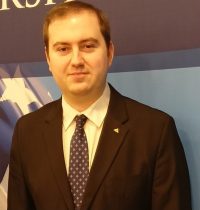
IOAN MATEI PURCAREA
Doctor
University educational processes and student experience are strongly related, improving his experience while ensuring university’s end-to-end value creation is a continuous challenging process, systematically introducing, among other aspects, planned changes, preparing the transition from Gen AI to AI agent.
Organizers


Co-Organizers